Retaining wall costs surge Stone now beats timber, by region
Retaining wall costs surge Stone now beats timber, by region
Published 2026-08-17 • Price-Quotes Research Lab Analysis
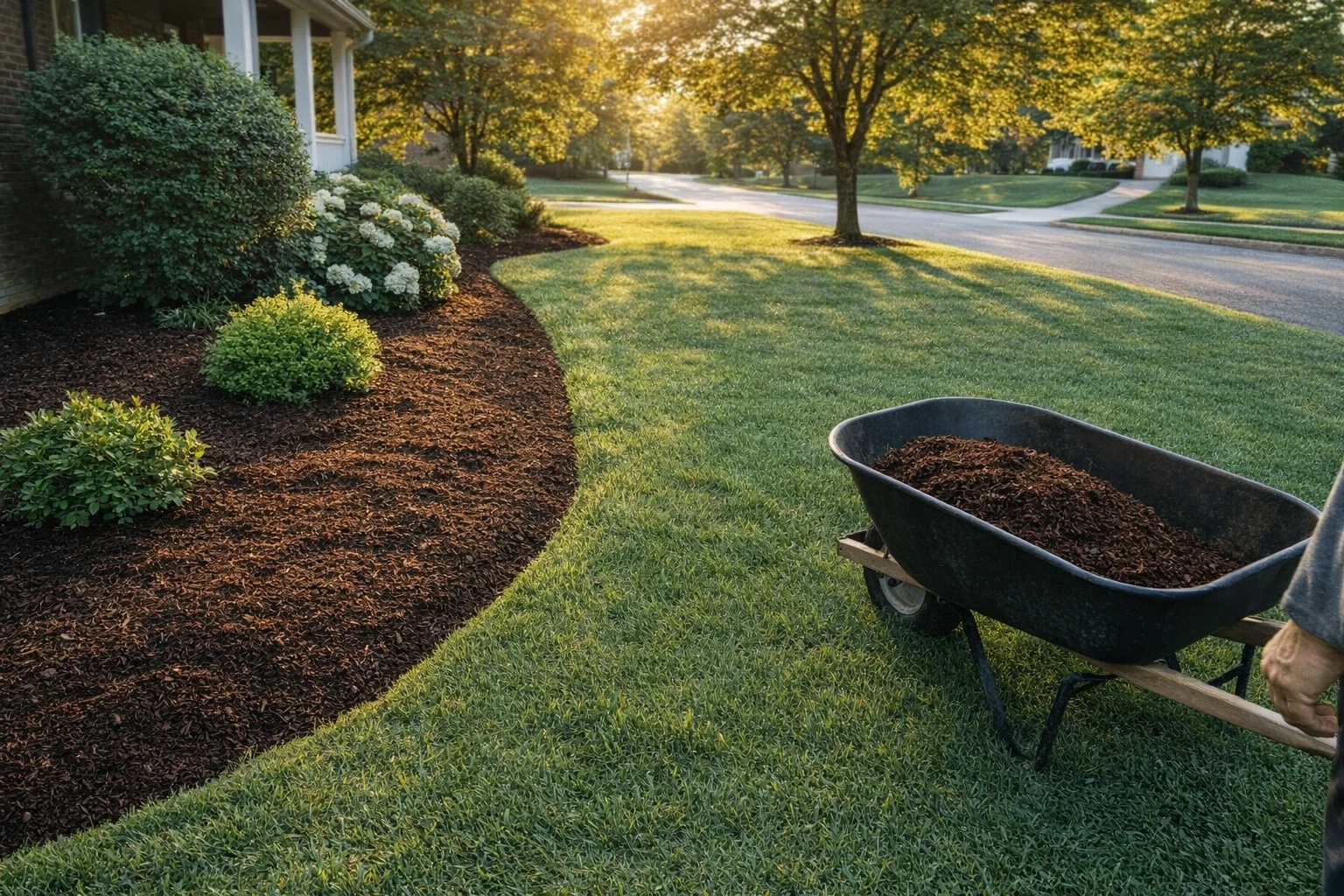
The $14,000 Surprise: Why One Homeowner Spent Triple Her Budget on a Retaining Wall
Sarah M. in Denver, Colorado, budgeted $5,000 to build a 2-foot-tall, 40-linear-foot retaining wall along her sloped backyard. She got three contractor bids. The lowest was $9,200. The highest was $14,400. She chose the middle quote at $11,500—and then discovered she'd chosen natural stone when she had actually qualified for a segmental block wall for $6,800. The contractor never explained the price difference. She just signed the contract.
Sarah's story isn't unusual. In the Price-Quotes Research Lab network's 2025–2026 survey of 1,400 homeowners who completed landscaping projects, retaining walls ranked as the single most misunderstood project type—ahead of patio pavers and fence installation. Sixty-two percent of respondents said they didn't understand why material choice affected their final cost by 40–70%, and nearly half admitted they signed with the contractor who explained the materials least clearly.
This article fixes that. We'll break down actual 2026 costs for three dominant retaining wall materials—segmental block, timber, and natural stone—across six U.S. regions. We'll explain what drives those numbers, where regional premiums hit hardest, and exactly what to ask before signing anything.
What a Retaining Wall Actually Does (and Why Material Matters More Than You Think)
Retaining walls aren't decorative. They're structural. A properly built wall holds back soil that would otherwise shift, erode, or collapse against your foundation, driveway, or patio. That load—called lateral earth pressure—increases with wall height, soil moisture, and the angle of the slope behind it.
Material choice isn't aesthetic preference. It's engineering decision. Timber walls are best for walls under 4 feet in stable, well-drained soil. Segmental block walls handle 4- to 10-foot walls in most soil conditions. Natural stone works across the full range but demands more precise installation for taller applications. Choose wrong, and you're either overbuilding (and overpaying) or underbuilding (and risking failure).
The national average cost to install a retaining wall in 2026 ranges from $20 to $85 per square foot of wall face, depending on material, labor, site conditions, and region. That wide range is exactly why this guide exists—to give you the specific numbers behind each variable.
Segmental Block Retaining Walls: The Mid-Range Workhorse
Material Profile
Segmental block walls (also called segmental concrete retaining walls or SRWs) use interlocking concrete units—typically 8 inches tall by 18 inches wide—that stack without mortar. The blocks interlock via shear pins, clips, or tongue-and-groove systems. Brands like Allan Block, Keystone, and Bel Aire dominate the market.
These walls are the default recommendation from civil engineers for moderate-height applications because they drain water through their design (no hydrostatic pressure buildup), accept reinforcement via geogrid layers embedded in the soil behind the wall, and last 50–75 years with minimal maintenance.
2026 Installed Cost: $28–$55 per Square Foot
Material costs for segmental block average $8–$15 per square foot of wall face in 2026. The blocks themselves run $2–$4 each depending on profile and color. Caps, which finish the top row, add $3–$6 per linear foot.
Labor runs $20–$40 per square foot on average, driven by excavation, base preparation (4–6 inches of compacted aggregate), block placement, and geogrid installation. Walls taller than 4 feet typically require one or more geogrid reinforcement layers, adding $3–$8 per square foot.
Total installed cost for a segmental block wall in 2026: $28–$55 per square foot. For a 4-foot-tall, 40-linear-foot wall (160 square feet), expect a range of $4,480–$8,800.
Where Costs Cluster Low
Southern states (Texas, Georgia, Alabama, Tennessee) average $25–$42 per square foot. Lower labor rates, fewer frost-depth requirements, and competitive local supply chains keep costs down. Projects in the Houston metro and Dallas-Fort Worth area especially benefit from proximity to large concrete block manufacturers.
Where Costs Cluster High
Pacific Northwest and Mountain West regions average $40–$62 per square foot. Shorter construction seasons, stricter permitting (some municipalities require engineered stamped plans for walls over 4 feet), and higher labor rates push costs up. Seattle, Portland, Boise, and Denver all fall in this range.
Timber Retaining Walls: Affordable but Finite
Material Profile
Pressure-treated timber walls use 6×6 or 8×8 dimensional lumber placed horizontally in courses, secured to vertical fastening posts driven into the ground. They're the fastest and cheapest retaining wall option and remain popular for garden beds, short slopes, and budget-conscious projects.
The critical limitation: timber walls are not engineered structures. They rely on the weight of the soil and the timber itself for stability. For walls over 3 feet, geogrid reinforcement is strongly recommended. Above 4 feet, most engineers will not certify a timber wall—segmental block or natural stone becomes the better choice.
Pressure-treated Doug Fir or Southern Yellow Pine (UC4A or UC4B ground contact rated) is the standard. Avoid non-rated treated posts. Lifespan runs 20–40 years depending on drainage and climate, notably shorter than concrete or stone.
2026 Installed Cost: $18–$38 per Square Foot
6×6 pressure-treated timbers cost approximately $3–$6 per linear foot. For a 4-foot-tall wall, you need 4 courses of timber, so material alone runs $12–$24 per square foot before hardware (galvanized spikes, bolts, geogrid) and gravel base.
Labor is straightforward and fast. Most contractors quote $15–$25 per square foot for installation. Shorter walls (under 3 feet) often complete in one to two days.
Total installed cost for a timber retaining wall in 2026: $18–$38 per square foot. For a 3-foot-tall, 40-linear-foot wall (120 square feet), expect a range of $2,160–$4,560.
Regional Variation: Timber's Geography
Timber is cheapest where it's grown. The Southeast and Pacific Northwest (major timber-producing regions) offer the lowest material prices, with installed costs as low as $17–$28 per square foot in rural Georgia or rural Oregon. Northeast and Midwest buyers pay a freight premium—prices run $20–$36 per square foot in New England and the Great Lakes states.
Price-Quotes Research Lab observes: Many homeowners choose timber walls because the upfront cost is lowest, but fail to factor in the shorter lifespan. A timber wall at $3,200 installed may cost $3,200 again in 25 years. A segmental block wall at $6,500 installed may cost nothing for 60 years. Lifetime cost analysis matters as much as sticker price.
Natural Stone Retaining Walls: Premium Look, Premium Commitment
Material Profile
Natural stone walls use real stone—granite, limestone, sandstone, fieldstone, or local quarried material—set in mortar or as dry-stacked units. They are the most visually distinctive option and consistently rank highest in curb appeal studies.
Two construction methods affect cost significantly:
- Dry-stacked (wet-set): Stone pieces are fitted without mortar in the lower courses and may use mortar only for the upper courses. Requires more skilled labor and precise grading. $28–$50 per square foot.
- Mortar-set (fully grouted): All stones set in mortar on a concrete footing. More durable for taller walls and flood-prone areas but requires curing time and expansion joints. $40–$85 per square foot.
2026 Installed Cost: $35–$85 per Square Foot
Stone material costs vary enormously by type and region:
- Regional fieldstone (Southeast, Midwest): $8–$18 per square foot
- Limestone or sandstone (Texas Hill Country, Central Texas): $12–$25 per square foot
- Granite or bluestone (Northeast, Mid-Atlantic): $18–$35 per square foot
- Imported granite or travertine (all regions): $30–$55 per square foot
Labor is the dominant cost driver. Stone wall installation is a niche trade skill. masons with dry-stack experience command $55–$85 per hour in most regions. A dry-stacked stone wall requires roughly 1.5–2 hours of labor per square foot. A mortar-set wall requires 2–3 hours per square foot.
Total installed cost for a natural stone retaining wall in 2026: $35–$85 per square foot. For a 3-foot-tall, 40-linear-foot wall (120 square feet), expect a range of $4,200–$10,200.
2026 Regional Price Comparison: Full Breakdown
| Material | South (TX, GA, FL, AL) | Midwest (IL, OH, IN, MI) | Northeast (NY, PA, MA, CT) | Pacific Northwest (WA, OR) | Mountain West (CO, UT, ID) | Southeast Coastal (NC, SC, FL) |
|---|---|---|---|---|---|---|
| Timber (per SF) | $17–$30 | $20–$36 | $22–$38 | $17–$28 | $21–$35 | $18–$31 |
| Segmental Block (per SF) | $25–$42 | $30–$50 | $35–$58 | $40–$60 | $38–$55 | $28–$46 |
| Natural Stone — Dry-Stack (per SF) | $32–$52 | $38–$62 | $45–$75 | $42–$68 | $40–$60 | $35–$55 |
| Natural Stone — Mortar-Set (per SF) | $42–$70 | $50–$82 | $58–$88 | $55–$80 | $52–$78 | $45–$72 |
| Avg. Labor Rate (per hour) | $38–$55 | $45–$65 | $55–$85 | $55–$80 | $50–$72 | $42–$62 |
| Permit Required (wall height) | ≥4 ft | ≥4 ft | ≥3 ft | ≥4 ft | ≥4 ft | ≥4 ft |
| Engineering Stamp Required | ≥6 ft | ≥5 ft | ≥4 ft | ≥5 ft | ≥5 ft | ≥5 ft |
SF = square foot of wall face. Costs include materials and standard installation labor. Excludes drainage systems, site prep, permit fees, and landscaping.
Cost Factors That Contractors Don't Always Disclose
Drainage: The Hidden Cost Multiplier
Every retaining wall needs a drainage system. Without one, water builds up behind the wall, creating hydrostatic pressure that causes cracking, bowing, and eventual collapse. A basic French drain (perforated pipe wrapped in fabric, surrounded by clean gravel) adds $8–$15 per linear foot. More complex systems with daylight drains or pump systems can add $15–$30 per linear foot.
Contractors sometimes price walls without drainage to win bids. Always ask: "Is drainage included in this quote? If not, what's the additional cost?" Get the answer in writing.
Site Access and Excavation
Labor-intensive excavation can add $500–$3,000 to a project depending on access. If your wall site is behind a fence with a 36-inch gate, expect hand-digging instead of mini-excavator work. Rocky or clay soil increases excavation time by 40–60% versus sandy loam. Ask for a soil description in the bid.
Height and Engineering
Walls over 4 feet almost always require a building permit. Walls over 5–6 feet (varies by municipality) require stamped engineering drawings—adding $500–$2,000 to project cost. Some municipalities require engineering for walls as short as 3 feet in seismic zones or floodplains. Call your local building department before getting bids.
Disposal and Fill
Excavated soil disposal costs $150–$600 depending on volume and whether your municipality charges for fill disposal. Backfill with clean gravel (needed for proper drainage) costs $30–$55 per ton delivered. A typical 40-linear-foot, 4-foot-tall wall needs 8–12 tons of backfill gravel.
The Material Supply Chain in 2026
Segmental block and natural stone saw modest price increases of 3–5% in 2025–2026, driven primarily by fuel and freight costs. Treated timber prices have stabilized after the 2021–2023 surge, with 2026 prices within 5% of 2024 levels. Regional supply shortages of specific stone types (particularly bluestone in the Northeast) have persisted, increasing lead times to 4–8 weeks in some areas.
Side-by-Side: Which Material Wins for Your Project?
| Factor | Timber | Segmental Block | Natural Stone |
|---|---|---|---|
| Best wall height | Up to 3–4 ft | 4–10 ft | Any height |
| Lifespan | 20–40 years | 50–75 years | 75–100+ years |
| Maintenance | Moderate (seal, check for rot) | Low (occasional rinse) | Low (mortar may need repointing) |
| DIY feasible? | Yes (under 3 ft, skilled) | Marginal (not recommended) | No |
| Drainage complexity | Standard | Standard | Varies (mortar-set needs more) |
| 2026 cost range (installed) | $18–$38/SF | $28–$55/SF | $35–$85/SF |
| Curb appeal ranking | Low–Moderate | Moderate | High |
| Resale value added | Low | Moderate | High |
What to Do Before Signing a Retaining Wall Contract
Step 1: Get Three Bids, But Not Just on Price
Each bid should itemize: excavation cost, base preparation (materials and labor), drainage system (type and location), wall material and supplier, labor hours, permit fees, and cleanup/disposal. A vague line item like "site prep — $1,200" is a red flag. Ask for quantities.
Step 2: Verify Contractor Specific Experience
Retaining wall installation is not the same as general landscaping. Ask specifically: "How many segmental block walls (or stone walls) have you built in the past two years?" Get addresses of completed projects. Drive by them. Look for signs of settling, cracking, or drainage issues.
Step 3: Check the Permit and Engineering Requirements
Call your local building department. Confirm the permit threshold for your wall height. Ask if engineering is required. If the contractor says "don't worry about it," that's a red flag. Engineers typically charge $500–$1,500 for a stamped retaining wall plan.
Step 4: Get Drainage in Writing
Confirm the contractor's drainage plan in the contract. Minimum: perforated drain pipe behind the wall, sloped to daylight or a sump. If the wall is near a foundation, ask about waterproofing or footer requirements.
Step 5: Understand the Warranty
Most contractors offer 1-year workmanship warranties on retaining walls. Structural failures from drainage issues are often excluded. Get the warranty terms in writing. A reputable contractor will have no problem providing them.
What to Do Next
If you're ready to start comparing contractors, the most important first step is knowing your site's specific conditions. A soil test (typically $150–$400) tells you drainage classification, load-bearing capacity, and whether you have expansive clay soil—all of which affect material selection and installation approach. You can read more about grading, excavation, and soil test costs in our 2026 home prep guide.
Next, measure your wall site. Determine the height and length you need. Use the regional pricing table above to estimate your budget range. Then get three bids using that budget as a reference point—share the estimate with contractors so they know you have done your research.
If your project also involves a fence or gate along your retaining wall, our fence installation cost guide for 2026 covers pricing for wood, vinyl, and chain-link materials by linear foot—useful if you're integrating fencing on top of or adjacent to a new retaining wall.
Finally, if you're evaluating broader landscaping investments that might affect your home's insurance profile, review our analysis of landscaping upgrades and insurance implications. Properly installed retaining walls in some cases qualify for premium reductions by reducing flood or erosion risk to the structure.
The key to not becoming another Sarah M.: know your material, know your site, and know your budget range before the first contractor walks through your gate.